What I want to address today is SUSPENSE. How does one create suspense in their scenes? It matters not what genre you write in, even in you're writing a romance, or a fantasy, you will come to scenes where you want to inject it with a little more drama and suspense. The masters are out there. Koontz is my very favorite author who has mastered the suspense genre, and if you have not gone outside your comfort zone of reading in order to learn this very crucial technique for your novel, or short story I suggest you pick up one in suspense genre. I highly recommend any Dean Koontz novel, but whoever the author you like in such a genre, do your homework and see how they do it. I'm about to tell you.

As writers we have to learn how to not only pace our books so that we don't arrive at the climax too soon, but when we need to draw our tension and hold the reader to the point where they just can't stand it any longer, you need to have the tools and knowledge to do this, and I'm gonna tell you how, since I've gotten it from authors who use this technique.
Scenario: you have the murderer in the house, or the villain is chasing the heroine. Or your vampire is going to do something to an innocent person. You need to know how to pace out that particular scene in order to hold your audience for the moment of truth--does this character get away? She's about to die a terrible death--how is she going to get out of this?
Drawing the moment out takes practice, and no matter how brilliantly your character gets out of her binds, does something to get away, or clobbers the villain, if you place that too soon and move on, you will not have gained anything. Your readers will go "okay" and maybe they'll keep reading but not feeling any emotions at all.
So, I'm going to reveal to you the PATTERN which which to write your scene. Listen up 'coz I'm not going to repeat myself.
ACTION
THOUGHTS
DIALOGUE
DESCRIPTION
In other words, you have the action of the scene--running, a chase, some sort of action which ends with the main character trapped.
Then, you will dip into your main character's thoughts, what they are thinking: The stairway is too far away, and the sliding door to the deck is locked, it would take her five precious seconds just to unlock it and he was right around the corner... she could hear him breathing. If she moved from her hiding spot he would see her for sure...
Dialogue can come whenever appropriate. What you want to do is mix these 4 things up. Possibly when the villain has the heroine in his grips and there's dialogue, or, maybe at the onset of the chase.
"You never answered my calls, Marry Ann. I don't like when someone never returns my calls. That's very upsetting."
"I-I was going to call you, really!"
"Riiiight. That's what they all say. Too bad you had to turn out to be such a bitch."
Well, this isn't stellar, but you get the idea. You then mix it up. Sprinkle in descriptions wherever possible to intensify the scene. What your character hears (a door or floorboard creaking), sees (shadows against the walls), tastes(blood?), smells (his cologne, sweat, a musty basement).
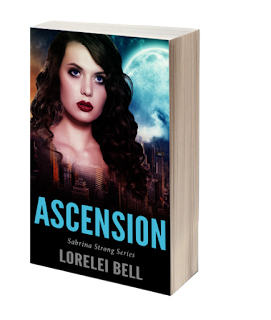
Keep on going through all 4 of these points until you have a page or two of good suspense. If you are doing this for your climax, you need to have enough for a whole chapter. Don't let up, make your hero suffer to the point of no return, make it seem like an impossible dilemma, and then at the moment when it seems she or he will die, or be bitten, or the most horrifying moment you can put your hero in (my second book has a very horrifying moment for Sabrina to get out of), you pull her out of the fire with your great moment that you have figured out and no one will have guessed that someone was there the whole time to come and save her, that some other thing your hero could use against the villain--whatever it is.
Dean Koontz, in the early part of his novel, Whispers, uses up 17 pages to describe the attempted rape of the lead character. That is what I would have to call a master if you can pull a reader through that much suspense and hold them to the very end of it.
The whole idea of creating a suspenseful moment in your book is to draw out the tension as best you can. Make your reader be there with your hero, taste, see, smell, etc. what the character does. If you are too excited to bring this to a close only to show readers how brilliant your idea is for your hero to escape, then your reader will not take notice. It will just have been a short scene where your hero really didn't seem to be in that much danger to begin with.
Now, go, my pretties, take with you these four secrets of writing suspense... and write your butts off!