Again, I wasn't able to comment at another blogger's post because of some glitch. T.C. Mckee, I would have had something to say at your blog about your conflict post. And the fact that you were reading until the ungodly hours of the morning. Oh, to be the writer who has held your attention that long. Would we give blood for this? Gold? I wonder.
The question posted was "Is there enough conflict in my WIP?"
How do we, as the writer, know? Unless you have some people who can read your WIP and give you honest feedback, you really don't know. So, how do you know?
This is from my story checklist the main two questions you ask as you do your read through:
1). Were the characters plunged into rising conflicts? - Did the action lag or conflicts become static or jumping?
I also always ask myself "are the conflicts believable?"AND "have I built up to them enough?"
Jealousy is a good one to work with. It is universal. Everyone knows how it feels. And it doesn't have to be about jealousy over another woman or man. It could be over a pet, a car--anything that the other person is paying a lot of attention to.
Conflict isn't just two people not getting along, or they hate each other for whatever reason. You can have two people who like one another, but disagree at some point about some pivotal thing that is important. Two brothers argue over money, a woman, land, who is going to mind the store, politics etc. But it has to be something important to the story.
What is the main problem in the story? What carries the story along? Is there a mystery to be solved? Who is in the way of that problem or mystery being solved? Could something else also get in the way of the hero/heroine solving the problem or mystery? This is where the conflicts come from.
Also, if the characters aren't likable the conflict doesn't have enough grist to pull the reader along. Who will care what happens to them? I remember not being able to get through the book, A Lovely Bones. I found myself distracted by the writing, and I really didn't care enough about the characters to find out who murdered the girl. To this day I don't have any idea who murdered her, nor do I even care.
So, the next thing you ask is :
2). Are all the conflicts resolved?
If you have a few conflicts that aren't resolved, that's okay, there's always book #2 to resolve them, or attempt to, and bring in new ones!
You might resolve a lover's triangle with a death of one of the players. Jealousy can create all sorts of interesting plots and sub-plots. But having a jealous husband or wife simply kill off the offending other person is sort of crapping out. You gotta make it interesting make it fresh; wow me!
You also want to ask: Does your climax have impact? Was there a surprise? Was the emotional impact powerful enough that the reader either cries, or feels some emotional response that has her wanting more? Does someone die, someone who is likable, someone who the heroine has had a relationship with?
Another question to ask: Have you avoided working up a conflict for some reason where maybe you should have? It might be that you have two characters getting along and you don't want them to be in conflict, but maybe the conflict will work in favor of the plot.
And finally: does each scene have a conflict? What is the objective of the scene and who holds it as though they own it? Is someone holding back the truth? Do they know something that is important to the story and if they told it would ruin the ending? Dialogue is a huge key. It pulls the reader along. Leave somethings unsaid. Have someone lie. Have someone hold a grudge, and it comes out later. Have someone secretly plotting to do ill toward your hero.
All important questions to think on.
Here is an example from something been working on my own WIP, just today. This is an example of one scene in one chapter that I've been working on which has some sort of small conflict. It hampers Sabrina's need to do what she came here to do.
Set up: Sabrina is on another world, where vampires rule, but humans are treated well enough. However there are some creatures called "Dreadfuls" who cause people to become sick and die. No one can kill these things. . . until Sabrina came along. The people she is speaking to are all humans. She's at a ball. She is trying to find her cousin Lindee, and take her home.
~*~
Ali floated in. "It's true! I saw her kill one in my room!"
Suddenly I was surrounded by excited faces. Gasps circulated around the crowd of on-lookers.
"How did you do it?" a woman in a pink taffeta gown surged toward me and I had to lean back a little because she was in my space.
"She has a dagger. Don't you?" Ali said.
"Well, yes--"
"But anyone who has ever tried to kill one with any weapon has never been able to kill it!" a man argued heatedly.
"It must be a special dagger," the woman in the ruffled pink taffeta dress, who was still standing in front of me said. She held her champagne in a gloved hand, in an awkward way--this was how everyone held their glass, around the rim--and took a slug. Her face was flushed. I thought that she'd had enough o f the bubbly.
"I--"
"Magical! That's what it is!" Ali exclaimed.
"Well, then, she must help rid us of these things!" a woman in blue said. I noticed the ruffles of her off-the-shoulder dress had beads threaded throughout. Her fan hung from one wrist, and a matching velvet bag hung from the other. "You know that Dedra has two at her place!"
"Two!" came the other woman's gasp, eyes wide.
Wonderful. I'd never have a chance to find Lindee, and then leave for my world if I was busy placating these people.
Now, get to work!
Showing posts with label wordsmithing 101. Show all posts
Showing posts with label wordsmithing 101. Show all posts
Saturday, June 25, 2011


Sunday, March 13, 2011
WORDSMITHING 101 ~ Learning to Plot from TV Shows

Have you ever watched older classic TV shows? I've been watching “Marshall Dillon” while having my coffee in the mornings with my husband. This was originally radio show, which later became the 30 minute TV show for 7 years, before it became the one hour show called “Gunsmoke” and lasted a total of 20 years, with the main characters, Matt, Miss Kitty, and Doc remaining on the show for all those years (except for Amanda Blake, who left after 19 years). I was in diapers when this show was on. Later when it became an hour long show, I remember watching it then, but I don't remember any of them.
What I've noticed in these shows are the basic murder/mystery plot. The first few minutes are used to introduce the characters who will be involved, aside from the 4 main characters. Dillon's side-kick, Chester, is played by Dennis Weaver. Anyway, the show opens up with the extras, and this is where you'll learn any motives which would make them look guilty for the murder that eventually takes place.
Although this is a western, the set up is like any murder-mystery. As in any murder-mystery, we, the viewer, can only know as much as our main characters. Matt Dillon, the sheriff of Dodge City, Kansas, must use the leads he has in order to find the killer. Often times, he has to track the person down out in the Kansas wilderness. Being a U.S. Marshall gives him this ability. Usually this person he is tracking is not the killer of the original murder in the beginning. But sometimes they have done something that will put them in jail, and often times they've killed someone along the way. Thus, you have a double-plot line, which is good for keeping everyone guessing. Misdirection is a basic key for a murder mystery. And depending upon how long a story goes, you could put in all kinds of red herrings and plot twists in to keep it interesting. Because “Marshall Dillon” was only 30 minutes long, it's easy to follow the plot line and see precisely how it is written.
What I've noticed is this is your basic plot all laid out. You have a mystery to solve. Doesn't matter if it is a murder. The mystery is what is important, and how it is solved.
 You can learn quite a bit on how to set this sort of plot up by watching several of these shows. The simplicity of them helps one glean an understanding as to how to set up a very simple mystery. I've always enjoyed watching “Murder She Wrote” for the same reason, but mostly because she was a writer. I used to love watching this show because Angela Lansbury starred as an amateur sleuth and I loved her character as the mystery writer Jessica Fletcher. The plots of “Murder She Wrote” were really well done, with plenty of twits and turns to keep you guessing.
Learning and understanding how a murder plot is done, you might want to watch either of these shows. Besides, being entertained, I think you might get a few ideas for a plot all your own.
Sunday, January 30, 2011
WORDSMITHING 101 ~ SUSPENSE
Suspense: 1). a state of uncertainty 2). the growing excitement felt while waiting for the climax of a novel, play etc.
Do you put suspense in your novel/stories? Suspense writers are best at knowing how to milk a scene, or put you on the edge of your seat throughout the book.
You don't have to be a suspense writer to add suspense and tension to your scenes. In fact your work will become more well-rounded if you do. If you have not quite grasped the theory as to how to bring suspense to a scene I've got it all here in just a few key words:
Action
Thoughts
Dialogue
Description
Emotions
When I know that I've got a scene that I want to milk, or any scene where I want to pull and hold the reader, the above sequence is what I like to use.
Action of the players: What is happening, and why.
Thoughts of the character you have chosen to be in their head: what are they thinking, show the process.
Dialogue: This can be between two people who are in danger, or it can be between two people who are at odds, the villain and the hero.
Description: the scene, and other aspects surrounding your character(s). You can put in here the tension, what their inner worries and concerns are. What are they going through?
Emotions also play a roll, as well as the physical aspects. Is their pulse hammering? Just saying they're frightened isn't enough. Make the sweat roll off their brow. If they've run away from danger, they should be breathing heavily, trying to catch their breath.
When you go into the scene you'll decide which to lead off with, and then you take each aspect and you use each in turn, or mixing it up when you need to.
This can also work in scenes which have nothing, or very little to do with life and death situations. I've used it in a scene where my sexual vampire is after a kiss from my protagonist. Sabrina is enthralled by Jett, unable to resist him, even though he isn't a sanguine (traditional) vampire, but he's quite charming and alluring. I wanted the scene to last, mostly because this moment was important to set things up between Sabrina (heroine), and the main character for the rest of this book. I saw the potential here to give the two some tension, demonstrate what sort of pull Jett has on her, why or how she is attracted to him, and why he could be potentially dangerous to her, if she falls for his charms.
By milking the scene with dialogue, thoughts, action, description ect., I was able to work up a full page, maybe a page and a half before she realizes the danger she is in.
Try this tecnique the next time you think you have a scene that seems flat, and you need the tension to escalate things a little bit.
Do you put suspense in your novel/stories? Suspense writers are best at knowing how to milk a scene, or put you on the edge of your seat throughout the book.
You don't have to be a suspense writer to add suspense and tension to your scenes. In fact your work will become more well-rounded if you do. If you have not quite grasped the theory as to how to bring suspense to a scene I've got it all here in just a few key words:
Action
Thoughts
Dialogue
Description
Emotions
When I know that I've got a scene that I want to milk, or any scene where I want to pull and hold the reader, the above sequence is what I like to use.
Action of the players: What is happening, and why.
Thoughts of the character you have chosen to be in their head: what are they thinking, show the process.
Dialogue: This can be between two people who are in danger, or it can be between two people who are at odds, the villain and the hero.
Description: the scene, and other aspects surrounding your character(s). You can put in here the tension, what their inner worries and concerns are. What are they going through?
Emotions also play a roll, as well as the physical aspects. Is their pulse hammering? Just saying they're frightened isn't enough. Make the sweat roll off their brow. If they've run away from danger, they should be breathing heavily, trying to catch their breath.
When you go into the scene you'll decide which to lead off with, and then you take each aspect and you use each in turn, or mixing it up when you need to.
This can also work in scenes which have nothing, or very little to do with life and death situations. I've used it in a scene where my sexual vampire is after a kiss from my protagonist. Sabrina is enthralled by Jett, unable to resist him, even though he isn't a sanguine (traditional) vampire, but he's quite charming and alluring. I wanted the scene to last, mostly because this moment was important to set things up between Sabrina (heroine), and the main character for the rest of this book. I saw the potential here to give the two some tension, demonstrate what sort of pull Jett has on her, why or how she is attracted to him, and why he could be potentially dangerous to her, if she falls for his charms.
By milking the scene with dialogue, thoughts, action, description ect., I was able to work up a full page, maybe a page and a half before she realizes the danger she is in.
Try this tecnique the next time you think you have a scene that seems flat, and you need the tension to escalate things a little bit.
Thursday, December 30, 2010
WORDSMITHING 101 - Part Six - Don't Give Your Protagonist The Easy Road
Just like there's rules of the road when you drive your car, when you write you need to have several rules of the writing road in mind as you write.
Conflict is one. This is pretty much king. If you don't want your characters to come out flat, if you don't want your readers to become bored because two characters agree too much with one another--because this just doesn't happen in real life, either--you need conflict to stir things up a bit. Even if they are friends. Every character has their own motives, their own secrets, their own destiny, and sometimes their destiny may cause conflict with another. And keep in mind, they may refuse to do something on the grounds that it's distasteful, or they fear something. That's why you need to know everyone of your characters intimately when you begin your story. If one person is afraid of heights, then put them in a predicament where they have to conquer their fear because it's a life and death situation.
Another rule that is also just as important is DON'T LET YOUR CHARACTER HAVE IT TOO EASY!
As I've been working along in my next two books, the things that my protagonist most wants in life is to love someone and be loved back. I'm not a romance writer, but there is romance in my books. In Vampire Ascending I don't want you to know who Sabrina will finally be with at the end, until we're more than half-way through the book. And in my second book, the very reason they were allowed to be together is pulled, yanked, because of--you guessed it--all the conflicting reasons behind who/what they are. Life is never fair and conflict is king. Emotions must play a part in some of the reasons your characters act and react the way they do, but you need to set it all up, carefully. Which is where I'm at with the second book.
But other than love, there are other things, the smaller things. The scenes that take place throughout. Whatever Sabrina's objective, even when she thinks she's got the whole thing figured out, something wild and new happens. It's usually something she has to deal with, and it's usually something she really doesn't want to do, but has to because of the fact she has no other options, and she has new responsibilities.
When you get into a scene with your characters the #1 question you have to ask yourself is What is the worst thing that could happen here, or to my character?
When Sabrina is babysitting her nieces in the second book, Vampire's Trill and her shift changing partner, Dante, is slowly trying to shift up into human form--which takes days--I had Sabrina stretched out on the couch watching TV with Dante in the form of a dog, her nieces up in bed, and soon her brother and his wife will come home. Suddenly the dog shifts into a black jaguar. And then, if this isn't scary enough, he shifts back into human form--buck naked.
At this point, again, I asked myself, how much worse could this get? Well, you guessed it. Her brother and his wife come home.
I must admit I like to throw a little humor into my books and this is just one example. Dante does make it out of the house, wrapped up in a blanket, but the crazy moments makes for both a humorous moment, and giving a break from some of the heavier things that happen throughout the story, and especially all the emotional things that happen after this moment between the two.
We, as writers, know almost instinctively what the worst things that might happen to our characters, and we have to at least give way to those ideas. You may wind up with an intriguing read if your reader simply doesn't know what will happen next.
Hey! This is the last Wordsmithing post of the year. I'll be back with a new one next week, hopefully, and hope to see you all there with me again!
Happy New Year!
Conflict is one. This is pretty much king. If you don't want your characters to come out flat, if you don't want your readers to become bored because two characters agree too much with one another--because this just doesn't happen in real life, either--you need conflict to stir things up a bit. Even if they are friends. Every character has their own motives, their own secrets, their own destiny, and sometimes their destiny may cause conflict with another. And keep in mind, they may refuse to do something on the grounds that it's distasteful, or they fear something. That's why you need to know everyone of your characters intimately when you begin your story. If one person is afraid of heights, then put them in a predicament where they have to conquer their fear because it's a life and death situation.
Another rule that is also just as important is DON'T LET YOUR CHARACTER HAVE IT TOO EASY!
As I've been working along in my next two books, the things that my protagonist most wants in life is to love someone and be loved back. I'm not a romance writer, but there is romance in my books. In Vampire Ascending I don't want you to know who Sabrina will finally be with at the end, until we're more than half-way through the book. And in my second book, the very reason they were allowed to be together is pulled, yanked, because of--you guessed it--all the conflicting reasons behind who/what they are. Life is never fair and conflict is king. Emotions must play a part in some of the reasons your characters act and react the way they do, but you need to set it all up, carefully. Which is where I'm at with the second book.
But other than love, there are other things, the smaller things. The scenes that take place throughout. Whatever Sabrina's objective, even when she thinks she's got the whole thing figured out, something wild and new happens. It's usually something she has to deal with, and it's usually something she really doesn't want to do, but has to because of the fact she has no other options, and she has new responsibilities.
When you get into a scene with your characters the #1 question you have to ask yourself is What is the worst thing that could happen here, or to my character?
When Sabrina is babysitting her nieces in the second book, Vampire's Trill and her shift changing partner, Dante, is slowly trying to shift up into human form--which takes days--I had Sabrina stretched out on the couch watching TV with Dante in the form of a dog, her nieces up in bed, and soon her brother and his wife will come home. Suddenly the dog shifts into a black jaguar. And then, if this isn't scary enough, he shifts back into human form--buck naked.
At this point, again, I asked myself, how much worse could this get? Well, you guessed it. Her brother and his wife come home.
I must admit I like to throw a little humor into my books and this is just one example. Dante does make it out of the house, wrapped up in a blanket, but the crazy moments makes for both a humorous moment, and giving a break from some of the heavier things that happen throughout the story, and especially all the emotional things that happen after this moment between the two.
We, as writers, know almost instinctively what the worst things that might happen to our characters, and we have to at least give way to those ideas. You may wind up with an intriguing read if your reader simply doesn't know what will happen next.
Hey! This is the last Wordsmithing post of the year. I'll be back with a new one next week, hopefully, and hope to see you all there with me again!
Happy New Year!
Monday, November 22, 2010
Words & Dialogue

Tillie eyed Dorian. They stared at one another for a long moment. Zofia wasn't sure if they were putting hexes on one another, or just trying to win a staring match.
Just when Zofia thought she should intervene, Tillie spoke up. "I, on the other hand, have in my possession two Grimoires." He snowy eyebrows dancing high. To have even one Grimoire in one's possession on Euphoria was against The Code of Ethics, thus both Zofia and Dorian were both staring at her dumbfoundedly.
"You do?" Dorian broke the stunned silence. There was a dark, conspiratorial glint in his eyes to go with his crooked grin. "I would never have guessed you, of all people, to possess such a thing." His sarcasm wasn't lost on Zofia.
"Where on Ugwump World would you come across two Grimoires, Aunt Tillie?" Zofia asked, astonished.
"Ive my sources," she said airily.
"Oh Ebay?"
The look of superiority deflated on Tillie's face. "Yes," she hissed lightly.
The above is from my book Spell of the Black Unicornn.
I had fun with my characters in this book. Dorian is Zofia's husband--who was once a wizard, now he's a vampire and wants to be turned back to his former self.
Tillie is a wizened sorceress--obviously she has resources at her disposal.
What do you notice about the conversation above? How do the three interact with one another? Who seems to have control of the situation? Dorian has a droll sense of humor, but he certainly knows how to insult his wife's aunt. It's almost a relationship one might see between a mother-in-law and son-in-law. But that's really what this is, since Zofia's parents both perished when she was young, and Tillie raised her.
Now, let's see how things turn around in this scene:
"I don't suppose you could look through them to find some sort of counter curse, or spell, could you?" Dorian asked.
Knobby finger tapping her chin, she hummed in thought. "I might."
"Please, Ottillie? I'd be forever in your gratitude."
Tillie smiled with a sinister gleam in her eyes. "A Grandier showing me gratitude--and pleading! I'll be a troll's fanny! I think I like that. I like it a lot. But you'll owe me, Grandier . . . and much more than mere words of gratitude, I'm thinking. After all, besides Zofia with the Stone, I'm the only one on First World who can perform any complex spell which might return your soul, and change you back into a wizard again."
"I-I can't use the Stone to--" Zofia started, but Dorian interrupted.
"Anything, Ottillie. Name it. If it's within my powers, I promise I'll grant it," he said.
"Seal of Katowice?" Tillie held up her left hand, palm out to him, index and middle fingers crossed as were the third and pinkie in the sacred pledge.
Dorian held up his hand in the same way. "Seal of Katowice."
Clapping her hands, Tillie jumped up and down excitedly, her braids became white ropes with life of their own."So mot it be!" She stopped jumping. "Tonight I'll look through my Grimoires." She pointed at Dorian with her crooked finger. "Mark my words, Dorian, you'll not regret this . . . neither will I." And then she left them.
excerpts from Spell of the Black Unicorn copyright by Lorelei Bell
Monday, October 4, 2010
WORDSMITHING 101 ~ Part Three: Dialogue
Today's entry in WORDSMIGHING 101 is, Dialogue Their Mechanics.
I thought I would set things up with something from deep within my own book, Vampire Ascending:
“I spoke to Nicolas,” Tremayne informed, coming out of his distracted expression.
“Yes?” I reached for the water glass, took a couple of sips from it, wishing it was a glass of wine.
“They finished questioning the woman. Her name was Solange, just as you'd said. She's from L.A., and, as you so brilliantly detected with your powers, is a shiftchanger. She changed into a cat to gain entrance into the garage.”
I nodded. Swallowing, I replaced my glass on the table. “What about the bag?”
“Leif and Darla have gone down to find it.” He went on swiftly, “She wasn't aiming for Heath, by the way. She was aiming for you.”
Shocked, I stared at him open-mouthed. “What? Me?”
Tremayne drummed the fingers of his free hand on the armrest. “Yes. My educated guess is that our killer knows about you, and wants you out of the way. You are the only one who can identify him, with your clairvoyant powers.” He shifted in his chair, staring intently at me. “I've been informed she was bitten. My guess is a rogue vampire is behind this.” His gaze went off me, looking pensive.
“But I thought we agreed that the killer was human.”
“The one who shot Letitia, yes. But the master-mind behind this must be a vampire. A human can't be hypnotized to the point of killing another person, unless they were already a killer, so she was enthralled by a vampire. We've identified our little shiftchanger as Solange LaPrima. She's from L.A., and that's all we got from her.”
“But you're saying a vampire bit her and sent her here?”
“Yes, sent her here to find and shoot you.” He squeezed his eyes. “I don't like that they knew where to wait for you. Or what you liked like.”
Me either. Where was that wine?strong>
©2010 Lorelei Bell
If you will note the dialogue moves along well, and we learn about something that concerns both speakers. You will also note that between the dialogue the two are doing something. These are called beats. The places where you identify who is speaking (he said/she said) are called speaker attributes. Also there is one instance of what is called interior monologue, at the end of this section.
Before I even go on, I have to make an admission. Not long ago I actually didn't know the mechanics of dialogue at all. I was doing it all wrong. Funny, people who read my material, never made note of it. Let me show you an example of what I was doing, and see if you catch it.
“I spoke to Nicolas.” Tremayne informed. . . .
It is quite subtle. But if you look closely at the punctuation, you'll see it. I'll make it easier:
“I spoke to Nicolas.” He said.
Now do you see it? There needs to be a comma after Nicolas, and before the quotation marks. Plus, He said, shouldn't be capitalized. I made this mistake, thinking I was doing it right.
How embarrassing! I was sending my books out with dialogue like this. The most aggravating thing about it is, I had written a novel and sent it off to a romance publisher, now more than a dozen years ago, and they were slightly interested, but said that there was a problem with the dialogue. Well, they didn't tell me what exactly. I didn't know what they'd meant. Had I known my mistake, maybe, just maybe, I would have had a first novel published back then.
I sort of stumbled upon my error when I decided to pay more attention to how books were written. Remember in my last post in this series I said to write down whole sentences of writers you like and examine how they write? I mean really pick it apart from word usage, to how they set up the whole thing, and right down to the mechanics of it.
Dialogue in a work of fiction is there to help you build characters, create tension between them, to inform the reader of certain details, and move the story along. In the above example, my main character—Sabrina—is given information in doses. By not having Tremayne go on and on in a long paragraph (which can get boring), I feed it to her—and to my readers--in sections. To break it all up, they are doing something. People fidget, or make some facial expressions, or move. Tremayne's shifting in his chair denotes that he is somewhat agitated by what is being discussed*. Even though he is a vampire. I don't like having a vampire not show some emotion, even in the minutest way. Instead of saying, he was nervous, I show you that he seems uncomfortable, or uneasy. At one point he “drummed the fingers of his free hand on the armrest”.
I do the same with Sabrina, who is drinking water, and wishes it was wine, instead. Having your characters doing something, is fine, but while something very important is being discussed, you don't want to put too much detail into what they're doing. That can make a reader loose interest, and take away the importance of what is being said. So, beats are alright, as long as you don't do it after every bit of dialogue. You want a balance.
Also you might note that no where in that above scene do I have a “he said/she said”. Why? I'm not really sure why this one example I chose didn't. But you will also note in some places I have no speaker attributes at all. You don't need to tell the reader who is speaking every time if there are only two people in the room. After the first few times this should be enough. But you also need to put some beats in, just to break up a string of dialogue. Unless you're trying to go for intensity in what is being said, of course. One writer I can think of who is very good at dialogue is Dean Koontz. He's an excellent writer, and I think anyone who picks up any of his books will see the man has the English language down so well, he could teach it. He's entertaining as well as well-learned, as he researches everything he writes about, and has written about a vast number of things in his writings. He is what is called a suspense/thriller writer.
One thing to remember as a writer, your characters are not in a blank room with nothing in it. There are plenty of “props” one can use to help make the characters in your novel feel real. You don't want to use too many, and in some cases, if you're cleaver, and can use it, the props can be somewhat suggestive toward what is going on, or what the other person might be thinking about instead of what is being said.
Let me take out the props in the text above and see how it sounds:
“I spoke to Nicolas,” Tremayne said.
“Yes?” I said.
“They finished questioning the woman. Her name was Solange, just as you'd said.
She's from L.A., and, as you so brilliantly detected with your powers, is a shiftchanger. She changed into a cat to gain entrance into the garage.”
“What about the bag?”
“Leif and Darla have gone down to find it,” he said. “She wasn't aiming for Heath, by the way. She was aiming for you.”
“What? Me?” I said, shocked.
“Yes. My educated guess is that our killer knows about you, and wants you out of the way. You are the only one who can identify him, with your clairvoyant powers. I've been informed she was bitten. My guess is a rogue vampire is behind this.” He looked pensive.
“But I thought we agreed that the killer was human,” I said indignantly.
“The one who shot Letitia, yes. But the master-mind behind this must be a vampire. A human can't be hypnotized to the point of killing another person, unless they were already a killer, so she was enthralled by a vampire. We've identified our little shiftchanger as Solange LaPrima. She's from L.A., and that's all we got from her.”
“But you're saying a vampire bit her and sent her here?”
“Yes, sent her here to find and shoot you,” he said, squeezing his eyes at me. “I don't like that they knew where to wait for you. Or what you liked like.”
Me either, I thought. Where was that wine?
In this version, I took out the props. Not as interesting, is it? It's sort of bland. Plus the speakers are just sort of floating. You don't know what they're doing—if they're seated or standing. I also added an -ly adverb in the speaker attributes and I also did the readers job in places where I shouldn't. Plus, if you will note at the end, where I have the interior monologue, I've placed the allocation: she thought, which is not needed. If we put in the italics, this speaks for itself. You, the writer, must not be visible. Saying “she/he thought” after the interior monologue, you've just talked down to your readers. If you've done it correctly, it should come across as the character's thoughts. That's all that is needed.
The she said/he said is fine in places you need them. If you are working to snag an agent, you don't want too many places where you've placed anything more. If it's a question the speaker is saying, then he/she asked is fine. Once in a while a little tweaking of speaker attributes helps, but never explain the emotion, unless this is your style. J.K. Rowling gets away with this continuously. But, we aren't J.K. Rowling or other fine best selling authors who add emotional tags such as:
stated flatly
informed quickly
said glumly, solemnly, casually, mildly, hastily, etc.
This isn't a hard and fast rule, and rules are meant to be broken, but don't have a string of these tags down a page. One per page is fine. Otherwise he said/she said works because as we read these attributes become invisible, the reader doesn't notice them and we can read on. By adding some beats, as I've shown, adds a quality, a depth to the characters themselves, shows their emotions without the writer having to say he/she was nervous. (Showing and telling will be another subject of a future post in this series)
One side note: I enjoy having my characters sit down to a meal, and figure out how they are going to say things while eating. It's a challenge, and it's fun. Plus, I don't like to starve my characters. My human ones, or my vampires, and so on. I hate reading a novel where the main character never eats—or is shown eating, or even mentions food, or having had anything to eat prior. If the task of placing people at the table and eating and talking is a bit difficult to manage, merely give them the props. Snagging a bit of food with a fork, cutting into a steak or some meat, a character shoving a bit of food to the side of their mouths, or slipping a fork between their lips, is enough to suggest that they're eating. Also, the little basics of life, such as jumping into the shower, or, in my case, my female characters love bubble baths. But we don't need to go through the whole moment by moment of them washing—unless this is a sex scene and we need to get into these details. Any of these scenes are up to the author, and how to work them in, if the scene calls for it, of course.
Another trick in dialogue to use, just to keep your readers interested, have your characters misunderstand one another, or not answer a direct question. This can show subtle tension between two people. They can also quickly change the subject. But if they do this, please don't say “She changed the subject”. Instead, the other character will note that the other person has changed the subject. I blew a strand of hair from my eyes. She always does this, never answers me . . . This is better than just stating it. We writers have to do our job, and we must allow the reader to do theirs.
Another note: We don't want our dialogue to sound exactly like the way people talk. We are trying to mimic real speech. We may tend to write dialogue and it seems stiff. Read it out loud to someone and see if they hear it, if you can't. Or, if you have a way to record it as you read it, then you might hear when you play it back how it sounds.
Don't forget using contractions, like don't, wouldn't, hasn't in the dialogue. People do not speak stiffly. In stead of them saying
“I do not know.” you want “I don't know.” Unless you are trying to get across that the person is more eloquent of speech, of course.
Interior Monologue, is a bit harder. The whole idea is we are getting into the character's head. I'd rather touch on this in another entry, since the mechanics of this can throw a lot of people. I know it did me for a long time. Signaling the interior monologue can be done with italics or without. I'd rather go into this in another series, rather than devote too much of it here.
The last thing I want to address is when dialogue is used, and you have one or more people speaking, when a new person speaks, you want a new paragraph all to that person, and what they're saying.
Also remember that ellipsis . . . are for gaps in speech. Dashes – are for interruptions.
*for information on body language here is a handy site for you:
http://www.businessballs.com/body-language.htm
Also recommended: Self-Editing For Fiction Writers by Renni Browne and Dave King
I thought I would set things up with something from deep within my own book, Vampire Ascending:
“I spoke to Nicolas,” Tremayne informed, coming out of his distracted expression.
“Yes?” I reached for the water glass, took a couple of sips from it, wishing it was a glass of wine.
“They finished questioning the woman. Her name was Solange, just as you'd said. She's from L.A., and, as you so brilliantly detected with your powers, is a shiftchanger. She changed into a cat to gain entrance into the garage.”
I nodded. Swallowing, I replaced my glass on the table. “What about the bag?”
“Leif and Darla have gone down to find it.” He went on swiftly, “She wasn't aiming for Heath, by the way. She was aiming for you.”
Shocked, I stared at him open-mouthed. “What? Me?”
Tremayne drummed the fingers of his free hand on the armrest. “Yes. My educated guess is that our killer knows about you, and wants you out of the way. You are the only one who can identify him, with your clairvoyant powers.” He shifted in his chair, staring intently at me. “I've been informed she was bitten. My guess is a rogue vampire is behind this.” His gaze went off me, looking pensive.
“But I thought we agreed that the killer was human.”
“The one who shot Letitia, yes. But the master-mind behind this must be a vampire. A human can't be hypnotized to the point of killing another person, unless they were already a killer, so she was enthralled by a vampire. We've identified our little shiftchanger as Solange LaPrima. She's from L.A., and that's all we got from her.”
“But you're saying a vampire bit her and sent her here?”
“Yes, sent her here to find and shoot you.” He squeezed his eyes. “I don't like that they knew where to wait for you. Or what you liked like.”
Me either. Where was that wine?strong>
©2010 Lorelei Bell
If you will note the dialogue moves along well, and we learn about something that concerns both speakers. You will also note that between the dialogue the two are doing something. These are called beats. The places where you identify who is speaking (he said/she said) are called speaker attributes. Also there is one instance of what is called interior monologue, at the end of this section.
Before I even go on, I have to make an admission. Not long ago I actually didn't know the mechanics of dialogue at all. I was doing it all wrong. Funny, people who read my material, never made note of it. Let me show you an example of what I was doing, and see if you catch it.
“I spoke to Nicolas.” Tremayne informed. . . .
It is quite subtle. But if you look closely at the punctuation, you'll see it. I'll make it easier:
“I spoke to Nicolas.” He said.
Now do you see it? There needs to be a comma after Nicolas, and before the quotation marks. Plus, He said, shouldn't be capitalized. I made this mistake, thinking I was doing it right.
How embarrassing! I was sending my books out with dialogue like this. The most aggravating thing about it is, I had written a novel and sent it off to a romance publisher, now more than a dozen years ago, and they were slightly interested, but said that there was a problem with the dialogue. Well, they didn't tell me what exactly. I didn't know what they'd meant. Had I known my mistake, maybe, just maybe, I would have had a first novel published back then.
I sort of stumbled upon my error when I decided to pay more attention to how books were written. Remember in my last post in this series I said to write down whole sentences of writers you like and examine how they write? I mean really pick it apart from word usage, to how they set up the whole thing, and right down to the mechanics of it.
Dialogue in a work of fiction is there to help you build characters, create tension between them, to inform the reader of certain details, and move the story along. In the above example, my main character—Sabrina—is given information in doses. By not having Tremayne go on and on in a long paragraph (which can get boring), I feed it to her—and to my readers--in sections. To break it all up, they are doing something. People fidget, or make some facial expressions, or move. Tremayne's shifting in his chair denotes that he is somewhat agitated by what is being discussed*. Even though he is a vampire. I don't like having a vampire not show some emotion, even in the minutest way. Instead of saying, he was nervous, I show you that he seems uncomfortable, or uneasy. At one point he “drummed the fingers of his free hand on the armrest”.
I do the same with Sabrina, who is drinking water, and wishes it was wine, instead. Having your characters doing something, is fine, but while something very important is being discussed, you don't want to put too much detail into what they're doing. That can make a reader loose interest, and take away the importance of what is being said. So, beats are alright, as long as you don't do it after every bit of dialogue. You want a balance.
Also you might note that no where in that above scene do I have a “he said/she said”. Why? I'm not really sure why this one example I chose didn't. But you will also note in some places I have no speaker attributes at all. You don't need to tell the reader who is speaking every time if there are only two people in the room. After the first few times this should be enough. But you also need to put some beats in, just to break up a string of dialogue. Unless you're trying to go for intensity in what is being said, of course. One writer I can think of who is very good at dialogue is Dean Koontz. He's an excellent writer, and I think anyone who picks up any of his books will see the man has the English language down so well, he could teach it. He's entertaining as well as well-learned, as he researches everything he writes about, and has written about a vast number of things in his writings. He is what is called a suspense/thriller writer.
One thing to remember as a writer, your characters are not in a blank room with nothing in it. There are plenty of “props” one can use to help make the characters in your novel feel real. You don't want to use too many, and in some cases, if you're cleaver, and can use it, the props can be somewhat suggestive toward what is going on, or what the other person might be thinking about instead of what is being said.
Let me take out the props in the text above and see how it sounds:
“I spoke to Nicolas,” Tremayne said.
“Yes?” I said.
“They finished questioning the woman. Her name was Solange, just as you'd said.
She's from L.A., and, as you so brilliantly detected with your powers, is a shiftchanger. She changed into a cat to gain entrance into the garage.”
“What about the bag?”
“Leif and Darla have gone down to find it,” he said. “She wasn't aiming for Heath, by the way. She was aiming for you.”
“What? Me?” I said, shocked.
“Yes. My educated guess is that our killer knows about you, and wants you out of the way. You are the only one who can identify him, with your clairvoyant powers. I've been informed she was bitten. My guess is a rogue vampire is behind this.” He looked pensive.
“But I thought we agreed that the killer was human,” I said indignantly.
“The one who shot Letitia, yes. But the master-mind behind this must be a vampire. A human can't be hypnotized to the point of killing another person, unless they were already a killer, so she was enthralled by a vampire. We've identified our little shiftchanger as Solange LaPrima. She's from L.A., and that's all we got from her.”
“But you're saying a vampire bit her and sent her here?”
“Yes, sent her here to find and shoot you,” he said, squeezing his eyes at me. “I don't like that they knew where to wait for you. Or what you liked like.”
Me either, I thought. Where was that wine?
In this version, I took out the props. Not as interesting, is it? It's sort of bland. Plus the speakers are just sort of floating. You don't know what they're doing—if they're seated or standing. I also added an -ly adverb in the speaker attributes and I also did the readers job in places where I shouldn't. Plus, if you will note at the end, where I have the interior monologue, I've placed the allocation: she thought, which is not needed. If we put in the italics, this speaks for itself. You, the writer, must not be visible. Saying “she/he thought” after the interior monologue, you've just talked down to your readers. If you've done it correctly, it should come across as the character's thoughts. That's all that is needed.
The she said/he said is fine in places you need them. If you are working to snag an agent, you don't want too many places where you've placed anything more. If it's a question the speaker is saying, then he/she asked is fine. Once in a while a little tweaking of speaker attributes helps, but never explain the emotion, unless this is your style. J.K. Rowling gets away with this continuously. But, we aren't J.K. Rowling or other fine best selling authors who add emotional tags such as:
stated flatly
informed quickly
said glumly, solemnly, casually, mildly, hastily, etc.
This isn't a hard and fast rule, and rules are meant to be broken, but don't have a string of these tags down a page. One per page is fine. Otherwise he said/she said works because as we read these attributes become invisible, the reader doesn't notice them and we can read on. By adding some beats, as I've shown, adds a quality, a depth to the characters themselves, shows their emotions without the writer having to say he/she was nervous. (Showing and telling will be another subject of a future post in this series)
One side note: I enjoy having my characters sit down to a meal, and figure out how they are going to say things while eating. It's a challenge, and it's fun. Plus, I don't like to starve my characters. My human ones, or my vampires, and so on. I hate reading a novel where the main character never eats—or is shown eating, or even mentions food, or having had anything to eat prior. If the task of placing people at the table and eating and talking is a bit difficult to manage, merely give them the props. Snagging a bit of food with a fork, cutting into a steak or some meat, a character shoving a bit of food to the side of their mouths, or slipping a fork between their lips, is enough to suggest that they're eating. Also, the little basics of life, such as jumping into the shower, or, in my case, my female characters love bubble baths. But we don't need to go through the whole moment by moment of them washing—unless this is a sex scene and we need to get into these details. Any of these scenes are up to the author, and how to work them in, if the scene calls for it, of course.
Another trick in dialogue to use, just to keep your readers interested, have your characters misunderstand one another, or not answer a direct question. This can show subtle tension between two people. They can also quickly change the subject. But if they do this, please don't say “She changed the subject”. Instead, the other character will note that the other person has changed the subject. I blew a strand of hair from my eyes. She always does this, never answers me . . . This is better than just stating it. We writers have to do our job, and we must allow the reader to do theirs.
Another note: We don't want our dialogue to sound exactly like the way people talk. We are trying to mimic real speech. We may tend to write dialogue and it seems stiff. Read it out loud to someone and see if they hear it, if you can't. Or, if you have a way to record it as you read it, then you might hear when you play it back how it sounds.
Don't forget using contractions, like don't, wouldn't, hasn't in the dialogue. People do not speak stiffly. In stead of them saying
“I do not know.” you want “I don't know.” Unless you are trying to get across that the person is more eloquent of speech, of course.
Interior Monologue, is a bit harder. The whole idea is we are getting into the character's head. I'd rather touch on this in another entry, since the mechanics of this can throw a lot of people. I know it did me for a long time. Signaling the interior monologue can be done with italics or without. I'd rather go into this in another series, rather than devote too much of it here.
The last thing I want to address is when dialogue is used, and you have one or more people speaking, when a new person speaks, you want a new paragraph all to that person, and what they're saying.
Also remember that ellipsis . . . are for gaps in speech. Dashes – are for interruptions.
*for information on body language here is a handy site for you:
http://www.businessballs.com/body-language.htm
Also recommended: Self-Editing For Fiction Writers by Renni Browne and Dave King
Subscribe to:
Posts (Atom)
AUDIO BOOK NOW AVAILABLE!
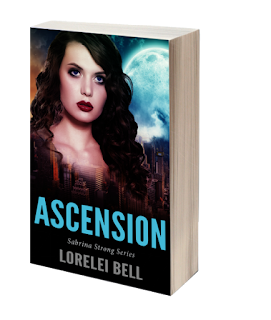
Hi, everyone, I have some great news! My first Sabrina Strong book, Ascension, is now in an audio book format. NOW THAT I HAVE YOUR ATTE...
-
 We interrupt your normal programming for a special message, today this site is being taken over by me Jeremy Hawkins… I am here to share...
 -
 Third Campaigner Challenge : Show Not Tell Write blog post in 300 words or less, excluding the title. The post can be in any format, (flash...
 -
 There's a few people out there who are slightly fed-up, or have fallen out of "love" with blogging. Or, some of us just don...