Showing posts with label mysteries. Show all posts

Tuesday, January 8, 2019

America's First Serial Killer


Secret passages, sliding walls, trapdoors in the floors, oddly angled hallways, stairways to nowhere, windowless rooms, doors which opened only from the outside...


A fun house?


No. This was no fun house. This was a torture-chamber of horrors in real life, built in Chicago 1893. At this time the World's Columbian Exposition (World's Fair) was held in Chicago, and many people were drawn to the fair. Holmes Castle seemed to be exactly the place to stay. Large, it took up a whole block and was three stories tall. Built by a man by the name of H.H. Holmes.


Sound-proof sleeping chambers with peepholes, asbestos-padded walls, gas pipes leading into some, and sliding walls, or vents that Holmes controlled from some other place in his huge “castle”, which he himself only knew the actual lay out, as he would change builders during the construction.

You would definitely not want to spend a night here. Your sleep would be permanent. After being asphyxiated. Or worse. It was believed that Holmes would place his victims into these special chambers, and then pumped lethal gas into them, controlled from his own bedroom where he would watch what happened.

In some cases he might ignite the gas to incinerate them, or sometimes a stretching rack he had devised.

Holmes had trapdoors in the floors with greased shoots, leading down into a two-level cellar. There he had installed a large furnace. In some cases it is thought that he would take twisted pleasure in dissecting the corpses, strip the flesh from the bones, and sell the skeletons to a medical school. (Later on, it was said that parts of bodies found were so dismembered and decomposed that it was difficult to tell how many bodies there actually were.)

His alias was Dr. Henry Howard Holmes. Aside from being a psychopathic serial killer, he was a swindler. He liked to swindle insurance companies. In many cases having a ready made corpse for the body of someone so as to collect on the insurance. He was also married to two women at the same time in two different states. He also liked to marry rich widows and then get them to leave him their wealth and then kill them.

His undoing was his last swindle. He found a lawyer who would go in on a plan to swindle an insurance company out of $10,000 by taking a policy out on himself, and faking his own death. He promised a man he went in on with $500 commission for the name of the lawyer who he could trust his plan to. The insurance company became suspicious and refused to pay. He decided to try a similar plan with his associate, Benjamin Pitezel. Pitezel had agreed to fake his own death, arranging that his wife would collect. Holmes was to find an appropriate cadaver to play the role of Pitezel. Instead, Holmes killed Pitezel. Evidence in the case against him was that he had administered chloroform to Pitezel after he died, trying—presumably--to fake a suicide.

The only thing that foiled Holmes was that he forgot to pay off a man who helped supply him with the name of the lawyer to help him with this scheme, and he tipped off the police.

As far as “the Castle” Holmes built in Chicago, a custodian for the place informed the police that he was never allowed to clean the upper floors, and so the police began a thorough investigation over the next few months. There are conflicting numbers as to Holmes' victims, but it has been said that anywhere from 20 to 100, and as many as 200, based upon the missing persons reports of the time, and testimony of his neighbors who saw him escorting young women to his hotel. Yep. A real life “Hotel California” where nobody leaves. He apparently liked blondes.

Holmes was convicted of murdering Pitezel and he confessed soon after, to 30 murders in Chicago, Indianapolis and Toronto. Some of these people were actually still alive. Apparently the man was such a good liar, even he couldn't keep track of his lies. At one point he even said he was possessed by Satan. You think?

On May 7, 1897, Holmes was hanged. It's really too bad we can't hang them a second and maybe a third time. However, he didn't die right away. It took him approximately 20 minutes to die.

Thursday, November 23, 2017

The Sherlock Holmes Theory

I haven't posted here in a while. I'm either too lazy or too busy. My current work, the third in my mystery series is taking whatever time I have between everything else.

But I did promise to take a portion of this book to post here. But first a brief explanation and set-up here.

I've become a fan of Sherlock Holmes, and my other posts in Lorelei's Writing Journal, I've posted about this very thing. I realized there was a 3-year span of no stories coming from Conan Doyle about Holmes, and that he had actually killed Sherlock off, but had to bring him back. He didn't get into his hiatus much, and everyone accepted this as Sherlock's memory loss, or as some refer to it as the Great Hiatus. This character was such a big hit in England, and elsewhere that Doyle had to continue with the story. However, he never wrote what happened in between.

Since my third Lainey Quilholt book Until We Murder Again is set in a writer's retreat where various writers of mystery have come together for a week long event of writing and round robins, I eventually had to decide what each of them wrote. There's a hard-boiled detective writer, for instance, there's one that's more into suspense/horror side of murder mysteries, one who writes the classic whodunit and another who does the cozy. My MC, Lainey, is writing a true-to-life story (this is the first book Party to a Murder.) And it is her first serious attempts writing.

Another writer is a Sherlock Holmes fan (yeah, you had to figure that was going somewhere, didn't you?). His name is Wesley Powell. I'd promised to share with you a bit of what he wrote. He is writing what he calls The Lost Manuscript of Sherlock Holmes. It opens where Sherlock has just grappled with Moriarty, and this was where the author, Conan Doyle left it, that he along with the villain went over the cliff into the Reichenbach Falls. But later on, it is revealed Sherlock actually survived, but didn't want anyone to know, because he knew that Moriarty's henchmen would be looking for him in order to kill him.

This is a portion of what I've written for this book:

Chapter 1
When Moriarty fell to his death that fateful day into the Reichenbach Falls of Switzerland, after I fought him to what should have been certain death for the both of us, I had to compose myself, surprised that I remained on the cliff and he had plunged into the churning waters over eight hundred meters down. I somehow managed to keep my balance and since he was fighting dirty, I also took this tact and gouged his eyes. I have to presume it was the younger, more agile man pitted against the older Moriarty, who was more set in his sedentary ways, giving the orders. While I, on the other hand, am an adept bare-knuckle fighter and know a bit of baritsu, which has helped me on occasion. Fighting for my life, I had to resort to variations on backstreet fighting.
Pressed against the cliff side, I looked around myself ascertaining I was quite alone. Already a thought occurred to me that Moriarty would have brought along at least one of his henchmen, and he would come here to make sure I had not survived his attack. What they would find is that I had survived and Moriarty had perished. A plot was already developing in my brain, that was at the same time terrifying and devious enough that I knew it should work, as long as I acted quickly. One part of me thought I dare not do it. But the other part—my reasoning part said it was the only way I would survive.
There was only one way for my certain survival and that was to allow everyone to believe I had died along with Moriarty, went over the cliff into the depths, fallen to my doom on the rocks below and washed away my body by the mighty rush of water.
I moved swiftly away, knowing Watson and others would soon be looking for me. The earth abruptly went vertical, and finding hand- and foot-holds on the rocks and boulders, I scrambled my way up to a flat area, where I could watch from above, unseen.
I waited. In a little while Watson appeared first. He found the spot where I'd left my stick and the pages I'd neatly written for him to find, in which I told him I'd known the note given to him had been bogus, intended to separate us. I watched him read and come to realization as to what had become of me. Watson called out for me, went to the edge and looked down hopefully. From there one could not see anything but the mighty falls churning all the way down a thousand feet. He continued to call when three men in [uniforms] also came to the spot. They looked around some more for some clue as to whether or not I had fallen to my doom. Of course, they would all come up with the only possible answer: I was gone.
I must admit my heart gave a lurch at first sighting Watson, watching him desperately call out for me. I nearly did return a yell, but stopped myself, realizing the folly. To allow anyone, even my most trusted friend to know I was alive would ruin the possibility of my own continued survival.
I remained hidden and still, watching the scene below as it sadly played out. It was best this way. At this time I did not know how long it would take for Moriarty's men to realize he was dead, and hunt for me. Moriarty's body would be discovered, eventually, down in the river below. But mine would not because I was still alive. It would hardly take a genius to figure out I was still alive.
In a moment of thrill, I realized I was about to set off on my own adventure. Of course, I would need money, what I had would not last me long. The only person I could dare contact would be my brother, Mycroft. He would keep my secret safe and wire me funds as I needed.
Once Watson and the others gave up and left, I straightened and moved off. Before I'd gotten very far, I heard first the sound of a slug hitting a tree, right after which I heard the report from a riffle. Automatically I dove for cover behind a rock, just in time, as another shot was fired and it ricocheted off the rock, exactly where I had been.
I did not stay long in my hiding place. I had no idea how many of them there might have been. A shooter would have easily pinned me down white others came after me.

I ran as fast as I could, dodging behind a tree, here and there, while the shooter somehow tracked and shot at me. My only chance was to keep inside the woods, and keep moving, which I did. I might have ran a mile before I slowed my pace and looked back. By this time, I'd come down off the mountain, somehow moving away from the rushing river and, well beyond the falls. I noticed there were trails and a road, but I knew to avoid them completely. I had to blaze my own trail, through underbrush, over rocks, and through fields of more rocks and weeds. Donning my deer-hunter's cap, I kept to the tall ancient forest, and headed toward the village. Knowing full well I would need a disguise, I would find a shop in a nearby town which I could procure these things. 

Monday, April 6, 2015

To Write, or Not To write...

Well, that's the question posed by a few writers. I've been down that road a few times. Early on, when I was in my twenties, and later in my forties, I got away from writing, for whatever the reason. Sometimes it was frustration. Back in the day your only hope was to get a publisher or agent to take you on. Now, we have people writing books so damned fast, they put out maybe as many as twenty or thirty in a year. I'm thinking they must have a set formula, or maybe a fancy writing disk, pop in names and boom, they have a book. I don't know. But Amazon is chock full of ebooks, and some are free. (I have a problem with giving away my writing, unless it's a short story, because my time and talent as a writer I consider worth something!)

I've been writing since the beginning of time (for me that was high school in 1971). Those times I told you I quit writing, well, guess what? I went back to it. Tried a different book, like a mystery or something. I would have to say, I was practicing writing. I was learning how to write, all those years. And you still learn even after you've published.

I don't write fast, unless a book hits me, and I can write it straight through. I did that on one book, and that was the fourth of the Sabrina Strong series, Caprice. I wrote that in just over three months. Yeah, that's probably the quickest book I've ever written, but also, that was a first draft. I go over my books to edit several times, I think it took me two years before I had it ready to be published. I don't hand them to an editor--I don't have that sort of money to invest. And until I got on with my new publisher, Creativia, I was having to depend upon people to read it through for me and find mistakes I would have missed. And after that I read it through two more times to make sure I haven't missed anything.

Up until last year, I wrote whenever I had free time. Then, I had some time off in the summer. I had a lot of energy, and wanted to do some major gardening things, and do some long walks to keep my energy up. I realized I wasn't enjoying life itself. I felt that turning 60, I needed to stop and smell the roses. I needed to just enjoy other things. One of my other passions became crocheting. I also enjoy reading a book. I like to hold a book in my hand--I'm finding a lot of people who would rather read a book, not an ebook, so I'm happy to have gone with a new publisher who can deliver a paperback version of my book to anyone in the world. I simply didn't have the savvy, patience, or the $$ to do it.

When it comes down to writing, I write because I CAN'T NOT WRITE. For those who simply write thinking they can make money, well phooey on them. I'm not saying I don't have dreams beyond all reason that I could make money, but after so many decades of not really doing that, I'm at the point where I'm just writing, and if I make a little money (even only $100/year), it's at least something I can take to the bank.

When I get an idea/ideas for a book, I keep notes on it, either in a document on the computer or on paper. I like a paper trail myself. At the moment, I'm trying to work on a mystery. It's a bit different writing. Everyone I've ever heard about how to write one says you come up with the murder, and write backwards. I don't know how to do that, but I understand the concept. You have to know who/how/what and come up with your suspects, but you alone know who murdered the victim, and with what, and then you plant all these clues, throw in a Red Herring, and you've got your story.

Well, I'm writing it the way I always write. I'll know who/what/how/when, when I get to it. Once I get to that point, I'll be able to throw in all those other things. I write assbackwards, anyway.

So, I guess for me, it's impossible to not write, but I'm doing less time in the old chair, and trying to do other things, too. Sort of like semi-retired, but never retired.

How about you? Do you ever need a break? Are life's crazy events keeping you from writing, and you're wondering if you'll ever be able to continue writing? Wonder if you should just take a long break from it, but worry if you do, you'll never be able to pick up the pen again?

Here is Shelly Arkon's take on this subject at her vlog. I love her vlogs, and Hair Ball, her dog is so sweet.

Hope you have a good week!

Sunday, September 1, 2013

Do You Read a Series?


Do you enjoy reading a series? I do. I prefer it to a stand-alone novel. It's what I write, and so that's what I enjoy reading. I want to get to know the main character/protagonist during the course of time. I enjoy the secondary characters, especially if they're quirky, or odd, or sexy. I hope that she/he doesn't become boring. I hate boring. I need him/her to find him/herself in some sticky fixes, and manages to get themselves out—maybe broken, hurt, in a hospital, narrowly escaping death.

I believe it was the Harry Potter series that got me hooked. Well, who can blame me? I remember reading the first one—you know, curious as to what everyone saw in this author's work. I had to see. I got done with that first one and had to get the second, the third and... well, I was hooked. I waited and waited for the next ones to come out—mind you, I bought the hard covers the day they released them (yes, I went to Wal Mart, and grabbed one of hundreds off the palate!)

I went on to read authors like Janet Evanovich, Charlaine Harris, and Kim Harrison—all of them have a series with the same main character, and the supporting cast, and whatever the author can come up with to keep you hooked and reading, waiting for the next one.

But, why do we get hooked on a series? I asked myself that and want to answer it in my own way. I think when you get into a series you've come to like the main character/protag. You know their personality, have some idea of what she's like, her views and temperament, and either you like those things in these MC's or at least you accept these things. She's become a sort of comfort to you, like a friend. You need her to tell you what's going on in her world—meanwhile escaping your own. That's how it works. Sometimes it's the place that is interesting, too. Well, no one will be able to hold a candle to Hogwarts Castle, but there are a few places I enjoy reading about.

Yeah, I think this is what it is. Like an old friend, you need to sit down and have a chat—well, she does all the talking, really. And you get to know all her quirky friends, some you like some you think are nuts, and others, well...

I've lately been reading Sue Grafton's Alphabet Mysteries. I bought several of her titles from a vendor at a local event (resale), and wanted to see if I really liked her writing, and the character. Well, I do. Now I find I've got to follow this author, and since there's a whole alphabet out there, I might be able to gobble these down quickly. Thing is, I've just about read through the G and so now need the next one, but I'm missing D. Damn!

When I created my series (I've got two, but as of now only one series has more than one title out there), I knew I needed a heroine who would resonate with the audience I was aiming for. She had to have some tough moments which had already happened to her, and many more to come. There is always at least one main mystery to solve, and one lesser one to resolve too, and a few other things... like men and romance. I'm always adding a new character. Sometimes they start out as being outrageous, and Sabrina isn't sure about them. But eventually they sort of wear on her. And really, the become her very best, most devoted friends, willing to back her up, do whatever they can to help her out.

Since I write fantasy, no reason I have to stay on the planet Earth. I've taken Sabrina to Dark World—where demons and vampires live, and lord over—and to another called Black Veil, where vampires rule (so really, do we want to go to other planets? Humm?)

Back to why I love the series. I remember closing a Harry Potter book at the end of the story and wishing it hadn't ended. I needed to see what happened after that. I wanted to be there with Harry, and his friends—such a wonderful world Rowling had created and it all seemed so real! I wanted to simply crawl inside the book, and somehow be there with them. That's what a series (or any well-written books) should have you feeling—somewhat. You've suspended your belief systems, have shared the joys, terrors, heartaches and triumphs of the main character and his/her friends. When this happens, then there's no question, you've made a fan for life.

So, do you enjoy a series? I'd love to hear about it.

Meanwhile, here's a couple links to my series. (Hah! You knew I would somehow use this to suck you into an ad for my own books, didn't you? You're so clever!)

Sunday, March 13, 2011

WORDSMITHING 101 ~ Learning to Plot from TV Shows


Have you ever watched older classic TV shows? I've been watching “Marshall Dillon” while having my coffee in the mornings with my husband. This was originally radio show, which later became the 30 minute TV show for 7 years, before it became the one hour show called “Gunsmoke” and lasted a total of 20 years, with the main characters, Matt, Miss Kitty, and Doc remaining on the show for all those years (except for Amanda Blake, who left after 19 years). I was in diapers when this show was on. Later when it became an hour long show, I remember watching it then, but I don't remember any of them.

What I've noticed in these shows are the basic murder/mystery plot. The first few minutes are used to introduce the characters who will be involved, aside from the 4 main characters. Dillon's side-kick, Chester, is played by Dennis Weaver. Anyway, the show opens up with the extras, and this is where you'll learn any motives which would make them look guilty for the murder that eventually takes place.


Although this is a western, the set up is like any murder-mystery. As in any murder-mystery, we, the viewer, can only know as much as our main characters. Matt Dillon, the sheriff of Dodge City, Kansas, must use the leads he has in order to find the killer. Often times, he has to track the person down out in the Kansas wilderness. Being a U.S. Marshall gives him this ability. Usually this person he is tracking is not the killer of the original murder in the beginning. But sometimes they have done something that will put them in jail, and often times they've killed someone along the way. Thus, you have a double-plot line, which is good for keeping everyone guessing. Misdirection is a basic key for a murder mystery. And depending upon how long a story goes, you could put in all kinds of red herrings and plot twists in to keep it interesting. Because “Marshall Dillon” was only 30 minutes long, it's easy to follow the plot line and see precisely how it is written.


What I've noticed is this is your basic plot all laid out. You have a mystery to solve. Doesn't matter if it is a murder. The mystery is what is important, and how it is solved.


You can learn quite a bit on how to set this sort of plot up by watching several of these shows. The simplicity of them helps one glean an understanding as to how to set up a very simple mystery. I've always enjoyed watching “Murder She Wrote” for the same reason, but mostly because she was a writer. I used to love watching this show because Angela Lansbury starred as an amateur sleuth and I loved her character as the mystery writer Jessica Fletcher. The plots of “Murder She Wrote” were really well done, with plenty of twits and turns to keep you guessing.

Learning and understanding how a murder plot is done, you might want to watch either of these shows. Besides, being entertained, I think you might get a few ideas for a plot all your own.

AUDIO BOOK NOW AVAILABLE!

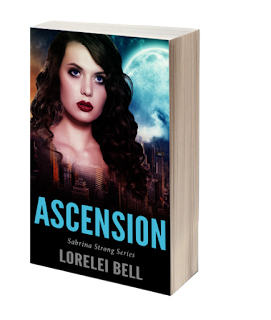
Hi, everyone, I have some great news! My first Sabrina Strong book, Ascension, is now in an audio book format.  NOW THAT I HAVE YOUR ATTE...